














Produktbeschreibung
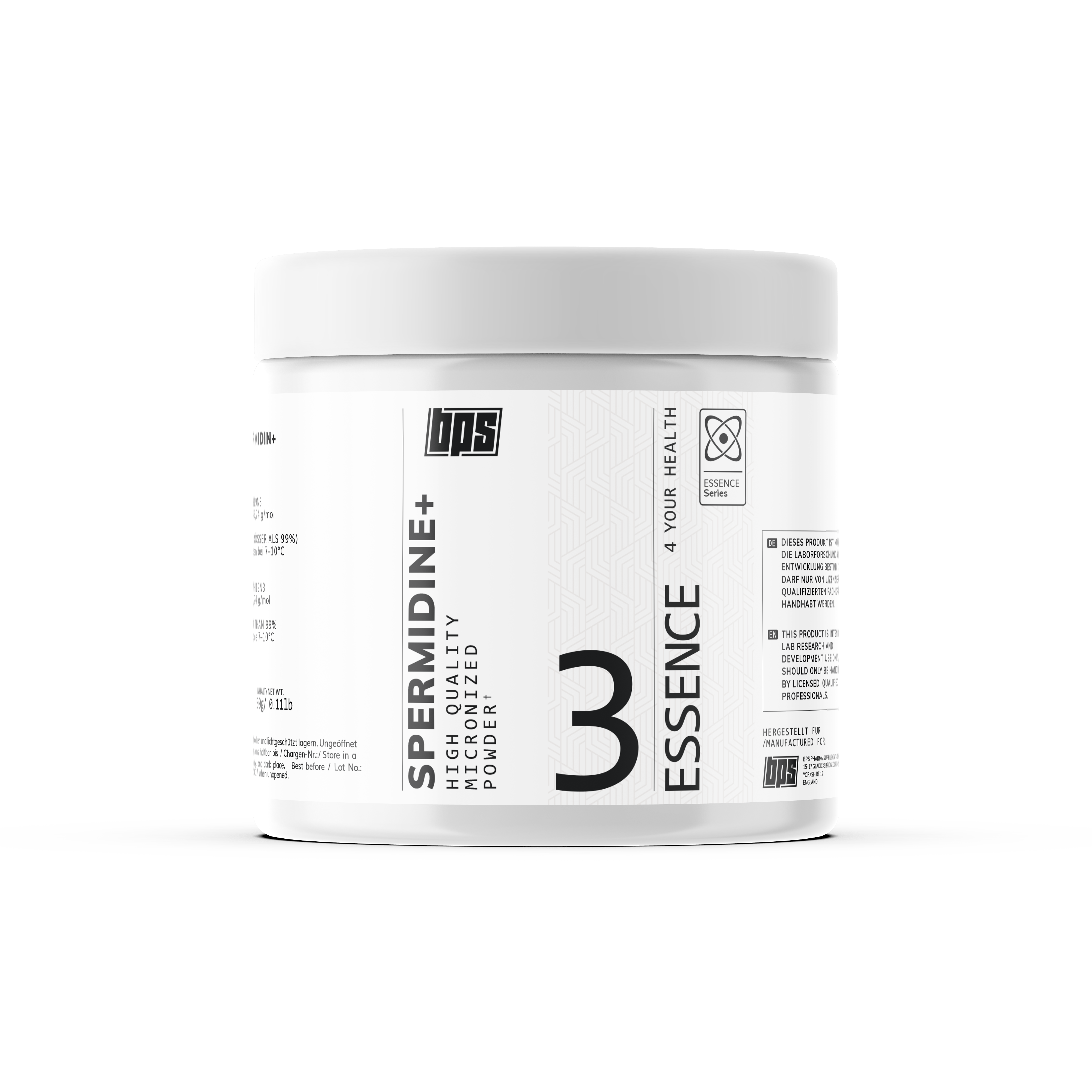
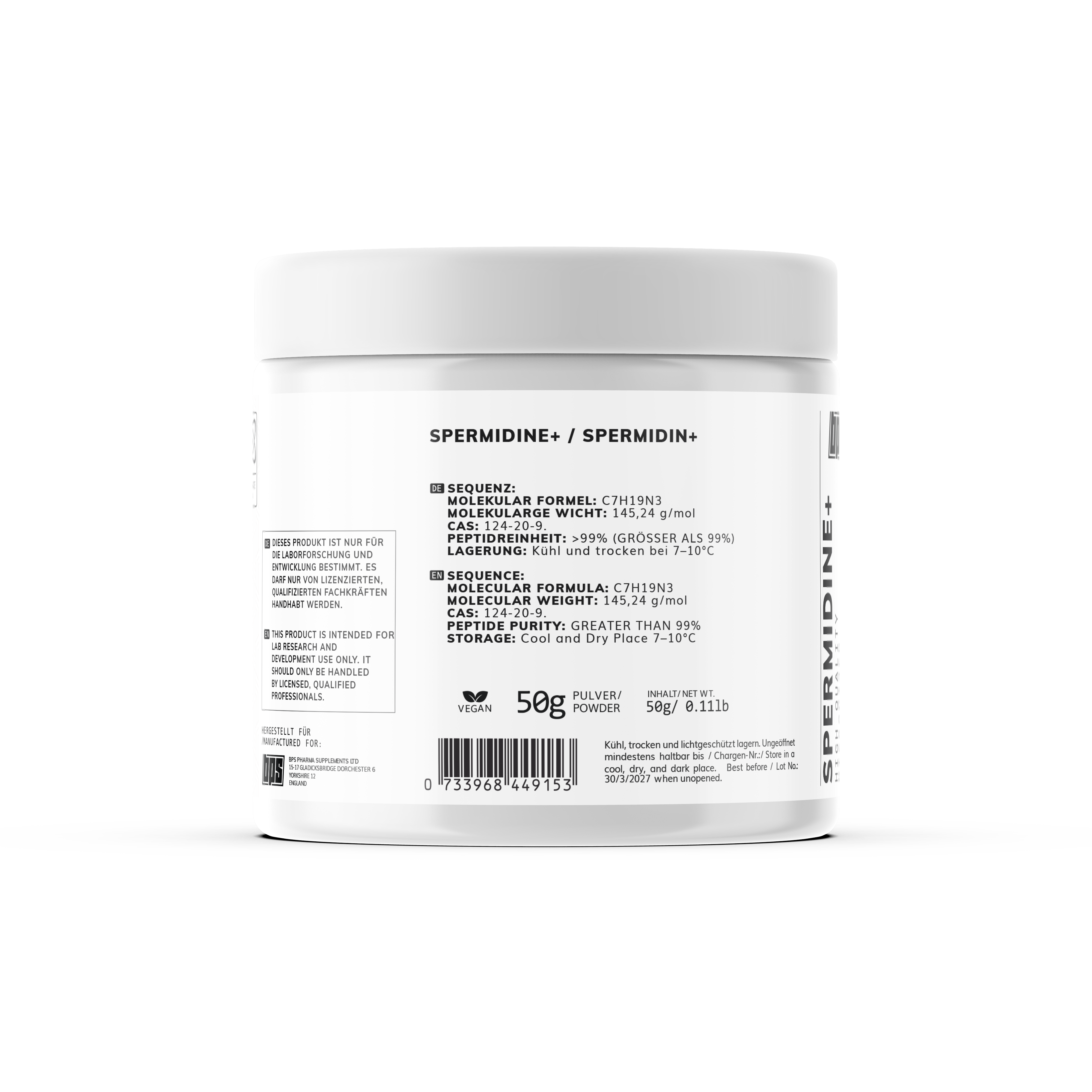
What is Spermidine+?
Spermidine is a naturally occurring compound found in all living organisms. It belongs to the polyamine group and plays an important role in various biological processes. Spermidine was first discovered in the 1920s, and its chemical structure was elucidated in the 1940s. It is being investigated as a promising agent for extending lifespan and treating various age-related diseases.
Spermidine's role lies in its function as a regulator of cell growth and division. It is involved in the formation and maintenance of DNA structure and plays a crucial role in regulating gene expression. Furthermore, spermidine has been shown to have antioxidant properties, neutralizing harmful free radicals that can lead to cell damage. Studies have demonstrated that spermidine can promote autophagy, a cellular process that degrades damaged proteins and organelles, thereby improving cell health and lifespan.
Due to its diverse biological functions, spermidine is now the subject of intensive research. There is evidence that increased spermidine intake can extend the lifespan of organisms, from microorganisms and worms to mice. Furthermore, studies have shown that spermidine may have a positive effect on various age-related diseases such as cancer, neurodegenerative diseases, and cardiovascular diseases. However, the precise mechanisms by which spermidine achieves these effects are not yet fully understood, and further research is needed.
One example of spermidine's health benefits is its positive impact on the cardiovascular system. Spermidine can help lower blood pressure, relax blood vessels, and improve circulation. This, in turn, can reduce the risk of heart attacks and strokes.
In summary, spermidine is of great importance to the body. It supports healthy cell growth, promotes detoxification through autophagy, and has positive effects on lifespan and health. Research into spermidine and its potential medical applications continues to be the subject of intensive study.
What spermidine can be taken for
Spermidine is a promising anti-aging agent in research and is said to both slow down the aging process and promote autophagy, which can have a positive effect on longevity.
Who can take spermidine?
Women and men aged 30 and over who are concerned with the topic of anti-aging and are interested in optimizing bodily processes with regard to longevity.
Does taking spermidine have side effects?
Currently, there are no known side effects from spermidine intake. This is because spermidine is not only obtained through our daily diet, but our bodies also produce it themselves.
The following foods contain a certain amount of spermidine:
• Wheat germ: 254 mg/kg
• Pumpkin seeds: 104 mg/kg
• Mushrooms: 88.6 mg/kg
• Peas: 46 mg/kg
• Hazelnuts: 21 mg/kg
Overall, there are many foods rich in spermidine. By incorporating these foods into your diet, you can ensure you're getting sufficient amounts of spermidine and benefiting from its health advantages. However, it's important to note that spermidine concentrations in foods can vary depending on factors such as cultivation and processing methods.
The role of spermidine in aging
Spermidine stimulates autophagy, a process in which cells break down and recycle their own worn-out components. This process is important for repairing damage in cells and slowing down the aging process.
The exact mechanisms by which spermidine extends lifespan are not yet fully understood. It is suspected that spermidine influences the activity of genes associated with aging and the immune system. Further research is needed to clarify the precise relationships.
Effects of increasing age on autophagy
Aging has been shown to affect autophagy, a vital intracellular process that enables the breakdown and recycling of cell components. With increasing age, the efficiency of autophagy declines, which can lead to an accumulation of damaged or aged cell components.
These changes in autophagy have numerous effects on the physical condition of older people. Firstly, the positive influence of autophagy on combating age-related diseases, such as cancer and neurodegenerative disorders, is impaired. The accumulation of defective cell components leads to increased susceptibility to cell damage and thus contributes to the progression of these diseases.
Furthermore, impaired autophagy can also lead to an accelerated loss of muscle mass and function, increasing the risk of falls and fractures in older adults. This loss of muscle and strength also impacts mobility and the overall quality of life of older people.
Overall, autophagy is of great importance for the physical condition of older adults. Impaired autophagy can lead to increased susceptibility to disease, accelerated muscle loss, and reduced mobility. Therefore, it is important to better understand autophagy in old age and to find ways to improve its efficiency and support the physical health of older adults.
Advantages at a glance
1. Spermidine can be used as an anti-aging agent.
Spermidine is considered a promising anti-aging agent in medicine and is therefore being intensively researched. It is believed to promote autophagy, the process of cell renewal, and thus contribute to longevity. It may therefore offer preventative support in cases of degenerative age-related diseases such as Alzheimer's.
2. Spermidine activates cell renewal in the body.
During autophagy, the cell disposes of accumulated waste, such as protein deposits, by recycling them. Autophagy plays a role in protecting against neurodegenerative diseases by ensuring the proper removal of cellular waste. Patients with dementia or Parkinson's disease often exhibit high levels of waste in the brain, indicating a disruption in the neuronal cell renewal process.
Spermidine activates cell renewal, allowing cells to cleanse and rejuvenate themselves to a certain extent. This process can be considered an anti-aging effect for the cells. Autophagy helps aging cells regenerate while simultaneously reducing deposits that can damage them. Spermidine plays a crucial role in the body and offers various long-term health benefits.
3. Spermidine protects the heart and brain
Spermidine is a polyamine to which various health benefits are attributed, such as stimulating the body's detoxification process, protecting the heart and brain, and potentially acting as an anti-aging agent. Research suggests that diabetics may also benefit from spermidine. Studies conducted at the Charité hospital in Berlin indicate that spermidine may have antiviral properties and could support the body in fighting viruses.
Sources
http://dx.doi.org/10.1093/ajcn/nqy102
http://dx.doi.org/10.1126/science.aan2788
http://dx.doi.org/10.1038/nm.4222
https://www.ernaehrungsmedizin.blog/2020/04/23/charite-studie-mit-spermidin-gegen-covid-19/
https://pubmed.ncbi.nlm.nih.gov/30306826/